How 6 weeks of synthesis turned 18 months of fragmented LGBTQ+ healthcare data into decisions a product team could ship against.
TL;DR
- Problem: 715+ respondents, 39+ community interviews, and 12+ provider sessions. Rich data, zero shared framework for what to build first
- Key decision: Gallery-format workshop turned 44 personas into 9 team-owned problem spaces that held for 7 months
- Approach: Multi-stage synthesis engine: confidence tracking, participatory workshops, expert validation, cross-functional prioritization
- Outcome: 4 HMW questions anchored the roadmap. Priorities survived a regulatory pivot without re-litigation

Key Outcomes
- 715+ survey respondents and 39+ community interviews synthesized into 9 confirmed problem spaces through 7 structured research sprints
- Museum of Problems aligned 14 cross-functional attendees on priorities that held through 7 months of development and a regulatory pivot
- Research directly shaped resource allocation: appointment booking received the largest engineering investment (T55+P34 story points), PrEP positioned as flagship entry point, wellbeing features deliberately deferred
- Clinical team + domain experts validated findings independently. Clinical team checked feasibility, external specialists worked on separate Miro boards to prevent groupthink
- Product achieved CQC certification, ISO 27001, and DTAC compliance, the UK's first free remote PrEP service, featured in Forbes, Sifted, DIVA, and The Times
Quick Facts
| Role | Product Designer (research contributor, co-facilitator, synthesizer) |
| Responsibilities | Co-led customer discovery interviews, led early surveys, co-facilitated Museum of Problems and Museum of Problem Stories workshops, led thematic analysis, synthesized problem spaces and personas, contributed to SPSS statistical analysis |
| Team | ~14-16 people across product, design, engineering, clinical, marketing, and commercial |
| Platform | Mobile app (iOS/Android) + Web dashboard (clinician-facing) |
| Timeline | Late 2019-2022 (research-intensive: Sep 2020 to Apr 2022, ~18 months) |
| Tools | Miro, Typeform, Zoom, Otter.ai, SPSS, Figma |
LVNDR Health
LVNDR Health is a digital health startup building the first LGBTQ+-focused sexual health platform. Their mission: address the discrimination, fragmentation, and anxiety that LGBTQ+ people face navigating sexual healthcare. The team of ~14-16 spanned product, design, engineering, clinical advisors, marketing, and commercial, a cross-functional group that would all need to align on what the research meant before anything could be built.
The Challenge

Over 50% of research participants reported experiencing discrimination, judgment, or ignorant treatment in healthcare settings. Not a single respondent in clinical services interviews used a resource designed specifically for LGBTQ+ sexual health. The existing system forced users to navigate fragmented, biased, and anxiety-inducing experiences.

The need was clear. The problem was direction.
18 months of research generated data across three separate tracks:
- 3 surveys: Troglo User Survey (96 respondents), Medication Survey (50 respondents with SPSS statistical analysis), PreventX Partnership Survey (569 respondents in 3 weeks, nearly doubling the 300 target at £1.05 CPA)
- 39+ community interviews: 9 customer discovery (30-min, PrEP users), 15+ identity and wellbeing (60-min, Zoom with Otter.ai transcription), 15 clinical services (60-min, diverse identity representation)
- 12+ provider interviews: GPs, sexual health clinicians, clinic managers, pharmacists, nurses, mental health professionals, each with a tailored discussion guide (6 guides total)
Hundreds of coded findings across clinical, wellbeing, and information quality domains. To make sense of this data, we created 44 personas, not as deliverables, but as a tool to map the entire problem space for queer health and well-being. The synthesis process generated themes from surveys and interviews alike, then translated those themes into personas and journey maps that made abstract findings concrete enough to prioritize. But having the map was not the same as knowing where to go. Zero shared framework for which problems to tackle first.
"We are struggling a bit to put rationale behind LGBTQ+ user prioritisation."
The research was rich. The richness itself was the problem.
What We Built
A synthesis engine, not a single sprint. Instead of rushing to conclusions, we built a process that let confidence grow over time:
- 7 structured research sprints with escalating confidence over 18 months, from big-picture vision workshops through identity exploration, clinical user interviews, provider interviews, and finally synthesis
- 6-7 week thematic analysis turning hundreds of coded sticky notes into clusters, then problem spaces. The most time-consuming and most important part
- 44 personas built to map the full problem space. The synthesis process turned survey data and interview findings into themes, themes into personas with journey maps, and personas into concrete problem spaces the team could evaluate and prioritize. Each persona carried a confidence level tracked from creation
- Participatory prioritization giving the whole team ownership of findings through gallery-format workshops
- Clinical team + 3-4 independent domain experts validated findings. Clinical team checked feasibility, external specialists each worked on separate Miro boards to prevent groupthink

The output: 9 confirmed problem spaces spanning clinical bias, access barriers, fragmented care, information quality, identity and belonging, mental health gatekeeping, privacy and stigma, polyamory and non-monogamy, and trans-specific barriers. 4 How-Might-We questions that anchored the entire product roadmap.

Decision 1
Why a Gallery Walk Beat Every Other Way to Prioritize 44 Personas
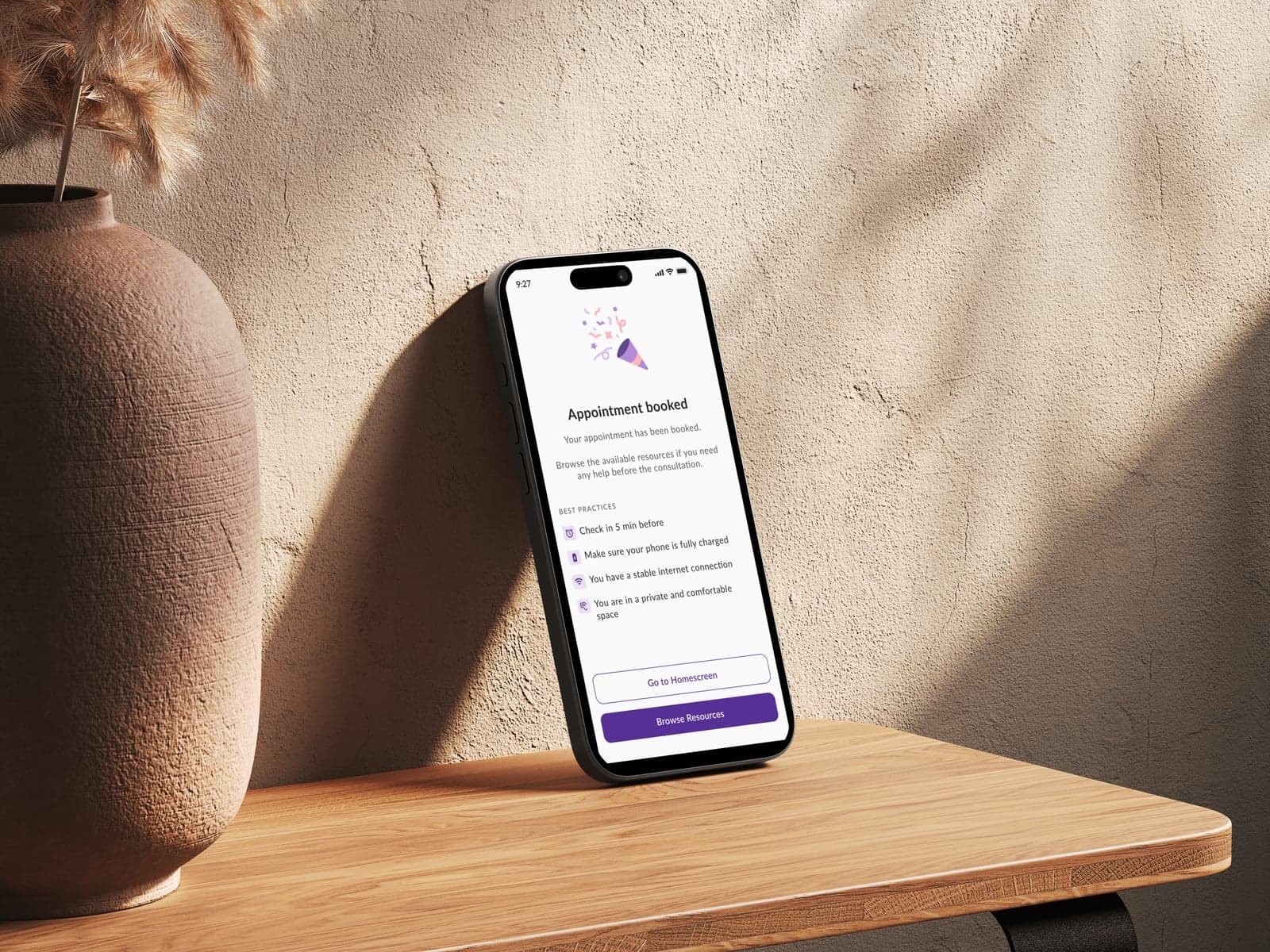
The synthesis process had produced 44 personas, each representing a distinct part of the queer health and well-being problem space, built from themes across surveys and interviews and grounded in journey maps. We had 14 cross-functional attendees (from the CEO to clinical advisors to developers), and no shared framework for which problems to tackle first. The personas existed on individual Miro boards. The team had seen summary presentations. But seeing a summary and sitting with a persona's full story are different experiences.
I co-designed a full-day gallery-format workshop (9am to 1pm+) called the Museum of Problems. The format was borrowed from participatory design, treating research findings as exhibits rather than slide decks.
| Option | Pros | Cons |
|---|---|---|
| Executive presentation + Q&A | Fast, decisive | One person's framing dominates; priorities fragile under pressure |
| Standard dot-voting on summary list | Democratic, quick | Strips context; rewards surface reactions |
| Affinity mapping with full group | Collaborative | Chaotic at 14 people with competing perspectives |
| Gallery-format workshop | Forces engagement with individual stories before abstraction; prevents loudest-voice dominance | Full-day commitment from 14 calendars; 6 weeks of exhibit preparation |
The 10-step agenda was deliberate: settling in, ice breaker, introduction, big-picture thinking, Museum of Problems round 1 (80 min, 3 rotating stations), break, Museum of Problems round 2 (80 min), coming together, free-space reflection, prioritization, and final reflections.

Each station presented persona-based problem scenarios with confidence color-coding: purple for hypothesis, green for somewhat confident, blue for confirmed in data. Attendees physically walked through stations, read exhibits at their own pace, formed individual understanding, then discussed as a group. The sequence mattered: when people experience individual stories first, they defend priorities differently in group discussion.
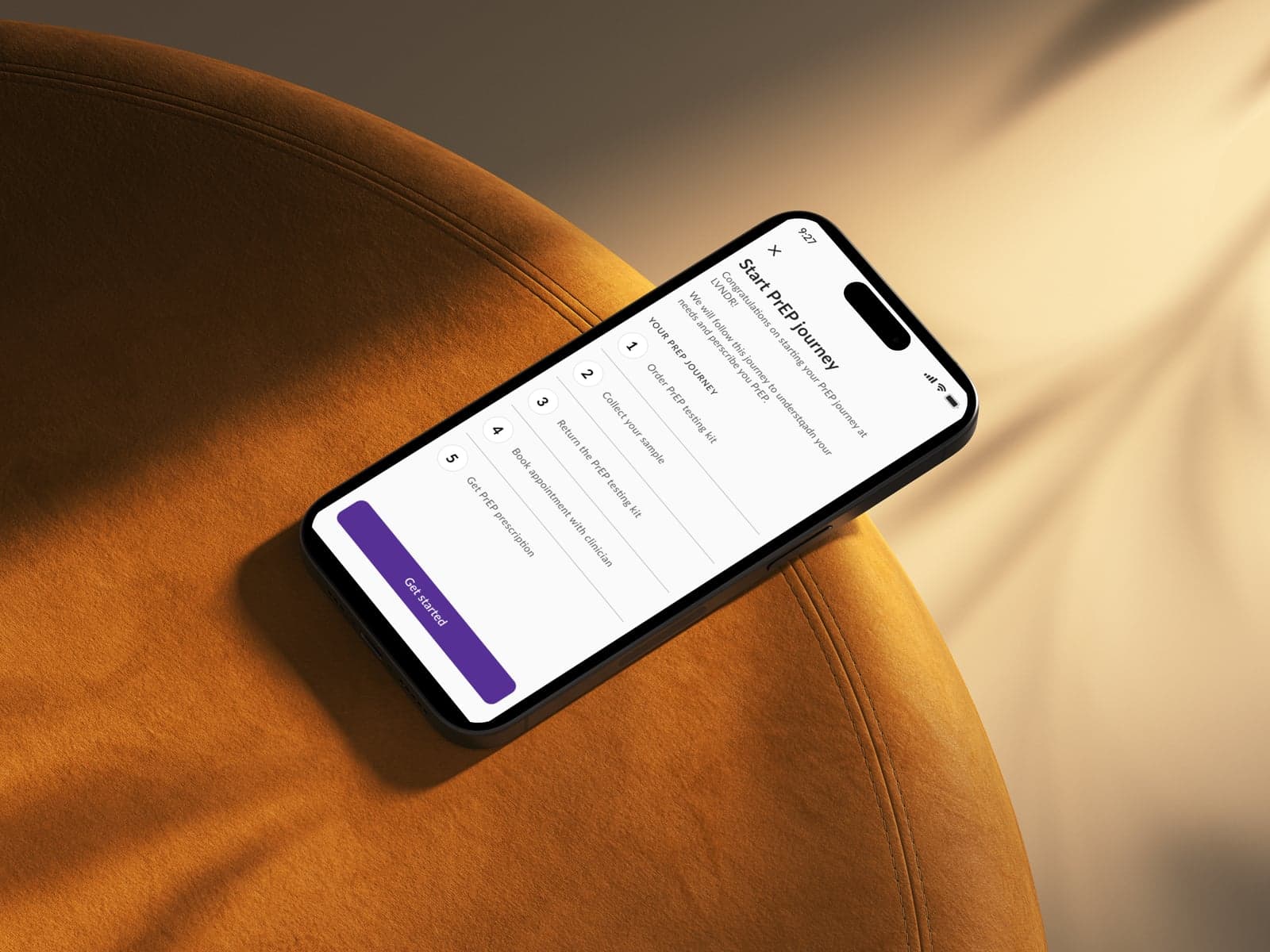
Post-workshop, every participant captured their "most excited" and "biggest fear" for the product direction. The team explicitly acknowledged: "There are more problem spaces to uncover." That honesty became an asset. It prevented the workshop from being treated as a definitive answer and kept research running through the build phase.
Result: 9 confirmed problem spaces with team-wide buy-in that held through 7 months of product development. When the CQC regulatory pivot flipped the roadmap, the team could point to the Museum of Problems as the basis for prioritization decisions. No re-litigation.
The Museum of Problems answered what to build. A second set of workshops answered how to build it.
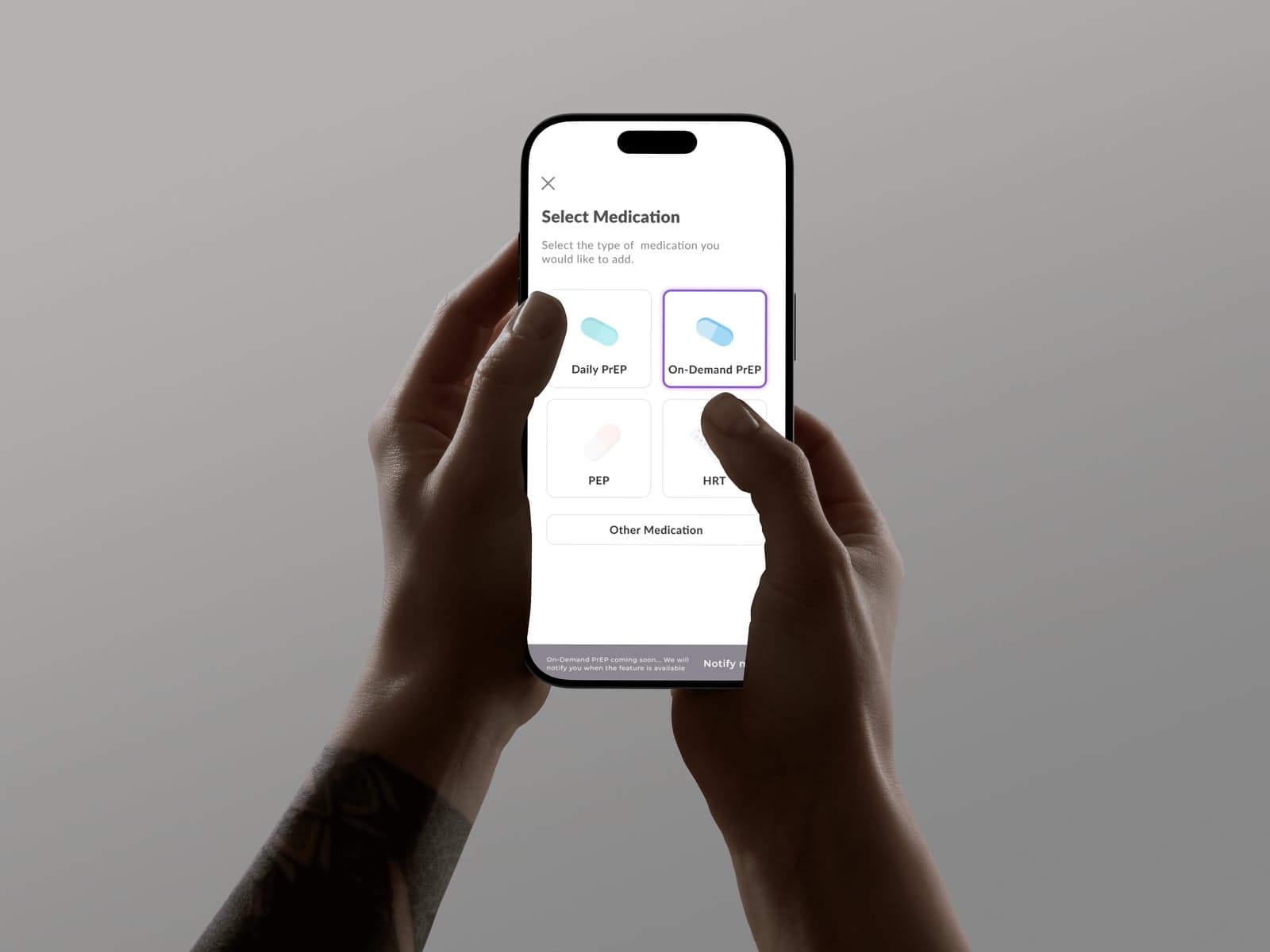
Two follow-up sessions (Museum of Problem Stories) took a different format entirely. Instead of a gallery walk with 14 people, these were intimate groups of four with cross-functional members, each mapping a single persona's journey from trigger event through system interactions to outcome, grounded in real interview data with emotional arc annotations at each step.
The clinical session mapped five journeys: Tom, a bisexual man refused a herpes test at every step until he paid a private clinic. Adi, an HIV-positive gay man bouncing between GP and sexual health clinic because neither could handle his full needs. Aurora, a polyamorous bisexual woman who couldn't get treatment for indirect STI exposure. Rumi, navigating contraception side effects without her mother present during COVID. Kim, told birth control was only for "sexually active" patients because she was in a lesbian relationship.
The wellbeing session mapped journeys including Molly, whose NHS anxiety quiz score was too low to qualify for mental health support ("I'm not even 'depressed' enough to be depressed"), and Peter, whose isolation and hookup app use escalated into patterns he couldn't control.
A third track mapped provider journeys: Ellen the receptionist navigating gender assumptions when booking PrEP appointments, Marv the pharmacist departing from prescribing guidelines to support patients, Clara the nurse who covertly messaged a receptionist during a safeguarding concern, with a 6-month mental health waitlist and "NO SOLUTION! (yet)."
These stories directly informed feature-level design: Tom's journey shaped the appointment booking flow. The provider stories revealed that clinicians spent the majority of consultation time on history-taking instead of care, which drove the 70/30 data collection architecture. Clara's safeguarding dead-end shaped the signposting and emergency resource integration.
Tradeoff: The two-workshop approach doubled the facilitation investment. The Museum of Problems alone would have produced defensible priorities. But the Problem Stories sessions produced the empathy depth that prevented the team from building technically correct features that missed the emotional reality of the people they were building for.
Decision 2
How Confidence Tracking Prevented Building the Wrong Thing
By the end of synthesis, 44 personas mapped the full problem space across 4 categories: 18 clinical service user personas, 12 wellbeing personas, 10 provider personas, and 4 "unwanted" anti-pattern personas (clinicians who actively discriminated, had zero LGBTQ+ knowledge, or gave partial knowledge creating false confidence). But they were not all equal. Some had strong multi-source validation from surveys and interviews. Others were hypotheses derived from a single conversation.
The risk was real in both directions. Acting on unvalidated findings meant building the wrong thing. Waiting for perfect data meant never shipping.
| Option | Pros | Cons |
|---|---|---|
| Binary validated / not validated | Simple, decisive | Forces premature certainty |
| No tracking | Zero overhead | Team acts on assumptions unknowingly |
| Numeric scores (1-5) | Granular | False precision for qualitative research |
| Three-level confidence tracking | Acknowledges uncertainty without paralyzing action; visual scanning | Adds overhead to every synthesis session |
I advocated for three levels: hypothesis (purple), somewhat confident (green), confirmed in data (blue), color-coded in Miro so the team could visually scan evidence strength at a glance. The system made uncertainty visible without making it paralyzing.
When a problem space rested on hypotheses, the team knew it and could choose: invest in more research, accept the risk, or defer. The Polyamory and Non-Monogamy problem space, for instance, had strong qualitative evidence (users describing systems that couldn't accommodate partner networks) but weaker quantitative validation. It was rated "somewhat confident" and prioritized accordingly. Important enough to acknowledge, not confirmed enough to anchor a feature bet.

The system caught one critical near-miss. Early medication tracking research showed that 7 in 10 PrEP users struggled to take medication on time, and competitor apps universally used streak-based gamification. The team's initial assumption was to follow the same pattern. But confidence tracking flagged that the assumption, "gamification drives adherence," had been borrowed from fitness apps, not validated in our domain.
When we A/B tested streak-based approaches with 10 participants, the verdict was immediate. Participants described streaks as "the wrong tone of voice for serious medications." A missed PrEP dose doesn't just break a streak. It means reduced protection against HIV. The engagement mechanic and the clinical reality had nothing to do with each other. Without confidence tracking, that assumption would have shipped as a feature. And it would have made people anxious about the very medication it was supposed to help them take.

Tradeoff: Added overhead to every synthesis session. Retroactively assessing findings already treated as established created friction. Team members resisted re-evaluating conclusions they had already internalized. If I did this again, I would start confidence tracking from the first synthesis session, not midway through. Early adoption costs less than retroactive assessment.
Decision 3
When the Most Painful Problems Are Not the Ones You Can Solve First
After the Museum of Problems, we had 9 validated problem spaces but finite startup resources. £1.5M in seed funding, 14-16 people, and a CQC regulatory window that was already narrowing. The team needed to prioritize in a way that honored real user pain while acknowledging that building poorly for a population that already distrusts healthcare would be worse than not building yet.
| Option | Pros | Cons |
|---|---|---|
| Rank by user impact only | Simple, user-centered | Ignores organizational capability; risks building badly |
| VP of Product decides | Fast, clear | Skips cross-functional buy-in; fragile under pressure |
| Unstructured dot-voting | Democratic, quick | No defensible rationale; easily influenced |
| 11-criteria framework, cross-functional voting | Transparent, defensible, introduces business thinking alongside empathy | Time-intensive: 9 problem spaces × 11 criteria |
The 11 criteria spanned three dimensions: individual impact ("How much does it impact the individual facing the problem?"), market viability ("Is this a problem people would sustainably pay for?"), and organizational capability ("Is this something we can solve with our current capabilities?"). Including "sustainable pay" alongside empathy criteria was uncomfortable but necessary for a startup that needed to survive to serve its users.
12 cross-functional voters scored each space. Four color-coded teams voted independently to reduce groupthink. 12 individual votes would have favored higher-confidence participants.

Some deeply felt problems ranked lower. Polyamory-related healthcare, where users described partners "giving up trying to get him to practice safe sex" because the system couldn't accommodate partner networks. Trans-specific barriers, where GIC waitlists stretched 6+ years and 23% of our PreventX survey respondents identified as non-cis-gendered. These ranked lower not because they didn't matter, but because LVNDR lacked clinical infrastructure to address them responsibly at that stage.
The 4 HMW questions that emerged:
- How might we enable and encourage LGBTQ+ people to access meaningful support when facing shame, guilt, and isolation?
- How might we make getting access to clinical services quicker, easier, and with less stigma?
- How might we improve the experience of remote care through better designed digital tools?
- How might we improve the process of taking and using patient histories?
Research directly shaped resource allocation: appointment booking received the largest engineering investment (T55+P34 story points, 50/50 UX/UI). PrEP was positioned as the flagship entry point because 45% of survey respondents already took daily or event-based PrEP, and the follow-up schedule (1st at 2.5 months, subsequent at 5+, annual at 11+) created natural retention. Wellbeing features (peer support, expert-designed pedagogy, psychometric evaluations) were explicitly deferred to Post-CQC, with individual reasons documented for each.
Tradeoff: Prioritization means telling people their pain is real but not yet addressable. The team acknowledged: "There are more problem spaces to uncover." That honesty was uncomfortable but prevented the workshop from being treated as a definitive, closed answer. The deferred problem spaces stayed documented, not deleted.
Decision 4
How We Knew the Research Was Right
Research synthesis at this scale carries a specific risk: the synthesizer's framing shapes what the team sees. If one person arranges 715 responses into problem spaces, the team is trusting that person's judgment, not the data. We needed validation that didn't depend on the team's existing assumptions.
| Option | Pros | Cons |
|---|---|---|
| Internal team review | Fast, no external coordination | Same biases that produced the synthesis review the synthesis |
| Single external reviewer | Independent perspective | One person's framing replaces another's |
| Multiple independent experts on separate boards + clinical team validation | Prevents groupthink; domain specialists catch what generalists miss; clinical team validates feasibility | Coordination overhead; multiple expert schedules |
Validation had two layers. First, LVNDR's own clinical team reviewed the synthesis against their domain knowledge and operational reality: could the identified problem spaces translate into services the clinical team could actually deliver?
Second, we brought in 3-4 external experts, each a specialist in a specific field: a facilitator, a sexual health educator, a clinical psychologist, and a women's and LGBTQ+ health specialist. Each worked on a separate Miro board with the same research materials. None saw each other's analysis before the session. The structure: 10-minute introduction, 20 minutes with user personas and problem scenarios, 45-minute discussion, 15-minute service mapping. Their specializations mattered. The sexual health educator caught nuances in PrEP access barriers that a generalist reviewer would have missed, while the clinical psychologist validated the mental health gatekeeping problem space from clinical evidence.
The experts validated our existing problem spaces rather than generating new ones. We wanted to know if our synthesis held up under independent scrutiny, not pile on more data.

The survey data told the same story the interviews did, from a completely different angle. People outside London had measurably worse access to PrEP than those in the city, confirming the Access Barriers problem space with statistical evidence (Mann-Whitney U) that stood independent of anything participants told us in conversation. Separately, the data showed that the more information people had access to, the more likely they were to use PrEP, confirming the Information Quality problem space. Two different methods, two different data sources, same conclusions.
The 4 anti-pattern personas served as a different kind of validation, not of user needs, but of systemic failure. Donald, the clinician who actively discriminated ("the doc refused to test me because of my sexuality and his religion"). Albert, the well-intentioned provider with zero LGBTQ+ knowledge. Sam, the intern too uncomfortable to ask important questions. Mary, the nurse with partial knowledge creating false confidence. These personas validated that the problems weren't individual bad experiences but system-level patterns.

The acid test came months later. The priorities held through 7 months of product development, a regulatory pivot (wellbeing-first to clinic-first), designer transitions, and a structural team bottleneck. When pressure came to change direction, the team pointed to the Museum of Problems process and the expert validation as the basis for decisions. The research framework outlasted the organizational stability.

Tradeoff: Expert coordination consumed time. 3-4 external schedules, separate board preparation, and synthesis of expert feedback against existing findings. The investment was significant. But the alternative, trusting a single synthesizer's framing with hundreds of data points, would have produced priorities the team couldn't defend when the organization came under pressure.
Reflection
Synthesis, not collection, is where research becomes valuable. The 6-7 week thematic analysis, turning hundreds of coded sticky notes into clusters, reviewed by clinical advisors, cross-referenced against survey data, was the most time-consuming and most important part of this project. Most portfolios showcase data collection. The real skill is turning 715 responses into 9 problem spaces a team can act on.
Participatory methods build conviction that presentations never will. The 4 HMW questions held through 7 months, a regulatory pivot, and multiple team changes because 14 people walked through the Museum of Problems together. Top-down research reports get filed. Co-created priorities get defended.
Confidence tracking prevents big missteps for small investment, but only if you start it early. Retroactively assessing findings already treated as established added unnecessary friction. Team members resisted re-evaluating conclusions they had already internalized. Starting confidence tracking from the first synthesis session costs less than the alternative.
If I did this again, I would also formalize the anti-pattern personas earlier. Documenting how the system fails (not just how users suffer) gave the team a different lens for design decisions, one that shaped how we built clinical safeguards, inclusive data models, and the clinician-mediated results flow that deliberately broke the "instant access" UX convention because our research showed why it was dangerous.