How we designed a sexual health platform where regulatory compliance and user dignity were the same problem.
TL;DR
- Problem: 50%+ of LGBTQ+ users in our research experienced discrimination in healthcare, yet clinical compliance demanded their demographic data
- Key decision: Inclusive data models separated gender identity from sex assigned at birth. The same fields served dignity and clinical accuracy
- Approach: A 70/30 data collection split gave users ownership of their story. Clinicians got their time back for actual care
- Outcome: UK's first free remote PrEP service launched with 6 regulatory certifications


Quick Facts
| Role | Product Designer (one of two designers) |
| Responsibilities | Full-cycle product design, design system architecture, research synthesis, onboarding flow design, PrEP tracker design, customer discovery |
| Team | ~14-16 people: designers, PM, engineers, clinical advisors, community growth lead |
| Platform | Mobile app (iOS, patient-facing) + Web dashboard (clinician-facing) |
| Timeline | 2020 – 2022 (~2 years; screens shown reflect the shipped product, which the team continued to refine after my departure) |
| Tools | Figma, Miro |
The Client
LVNDR Health is a UK-based digital sexual health startup building inclusive healthcare for LGBTQ+ communities. The company set out to create the UK's first free remote PrEP (HIV prevention medication) service, backed by clinical partnerships and regulatory certifications. The team included designers, engineers, a PM, clinical advisors, and a community growth lead, all working toward a platform where compliance and dignity weren't competing priorities.
The Challenge


Over 50% of our interview participants described discrimination, judgment, or ignorant treatment during sexual healthcare. Trans participants were assumed to have specific genitalia based on presentation. Users learned to lie to navigate these systems.

- 42% would not disclose their LGBT+ status to providers
- 65% rank privacy as their primary criterion for choosing sexual health services
- 64% feel anxiety regarding sexual healthcare
- Zero respondents used an LGBTQ+-specific sexual health resource
"It actually taught me the quickest way to get better was to lie and not to tell the truth... that's the only way to navigate your way around some of these systems." (PrEP user, LVNDR community research)

Meanwhile, GUMCAD (the UK's mandatory STI surveillance system) requires structured demographic data from ~400 services. It demands exactly the kind of data that has historically been weaponized against LGBTQ+ users.
So the question we kept coming back to: how do you collect data from people who have been hurt by data collection?
What We Built
We stopped treating compliance and dignity as competing priorities. They were one design problem. The platform rests on three decisions:
- Inclusive data models. Separate gender identity from sex assigned at birth. The same fields respect identity and feed clinical logic.
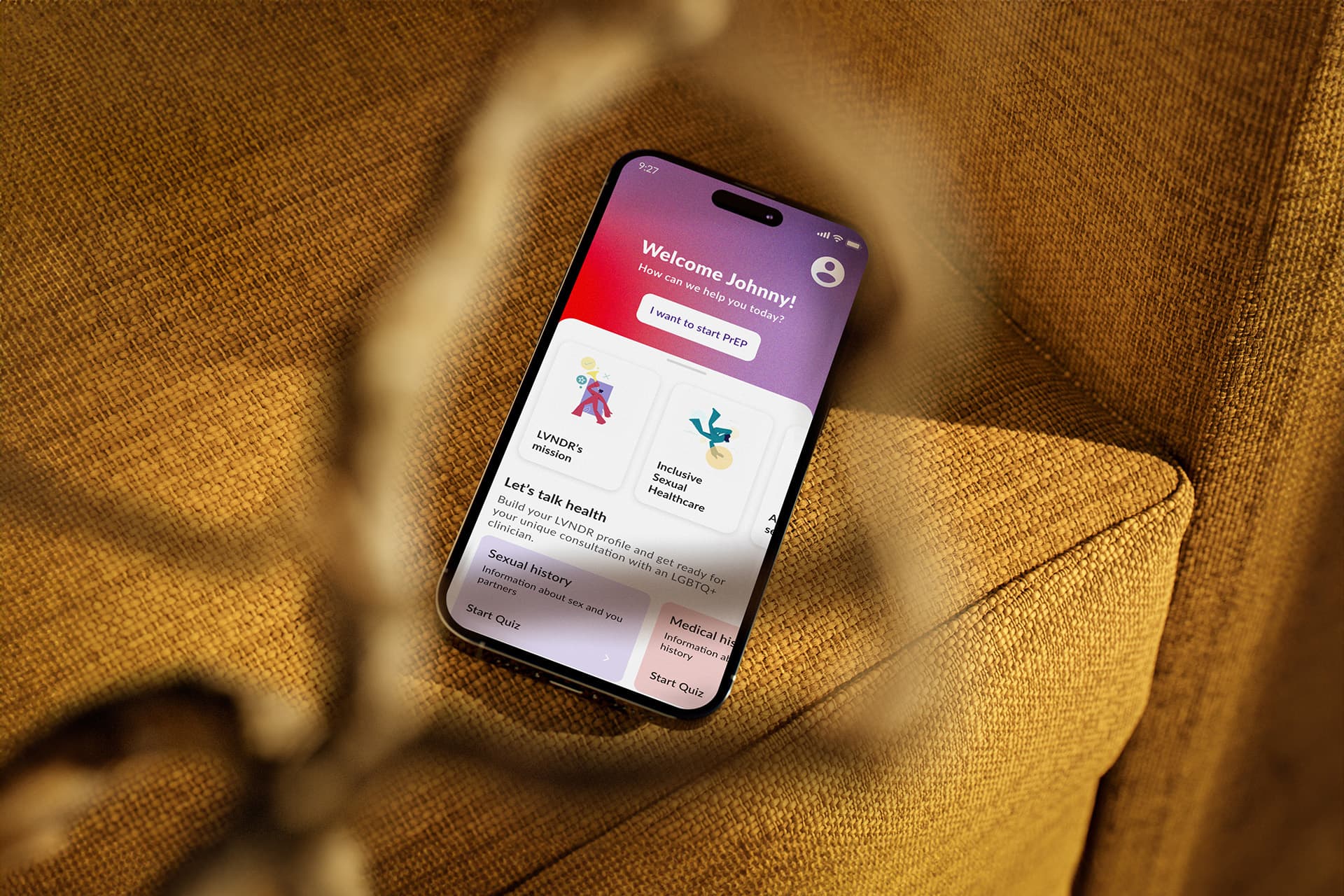
- 70/30 data collection split. Users self-complete 70% during onboarding, framed as personalization. Clinicians handle the remaining 30% during consultation.
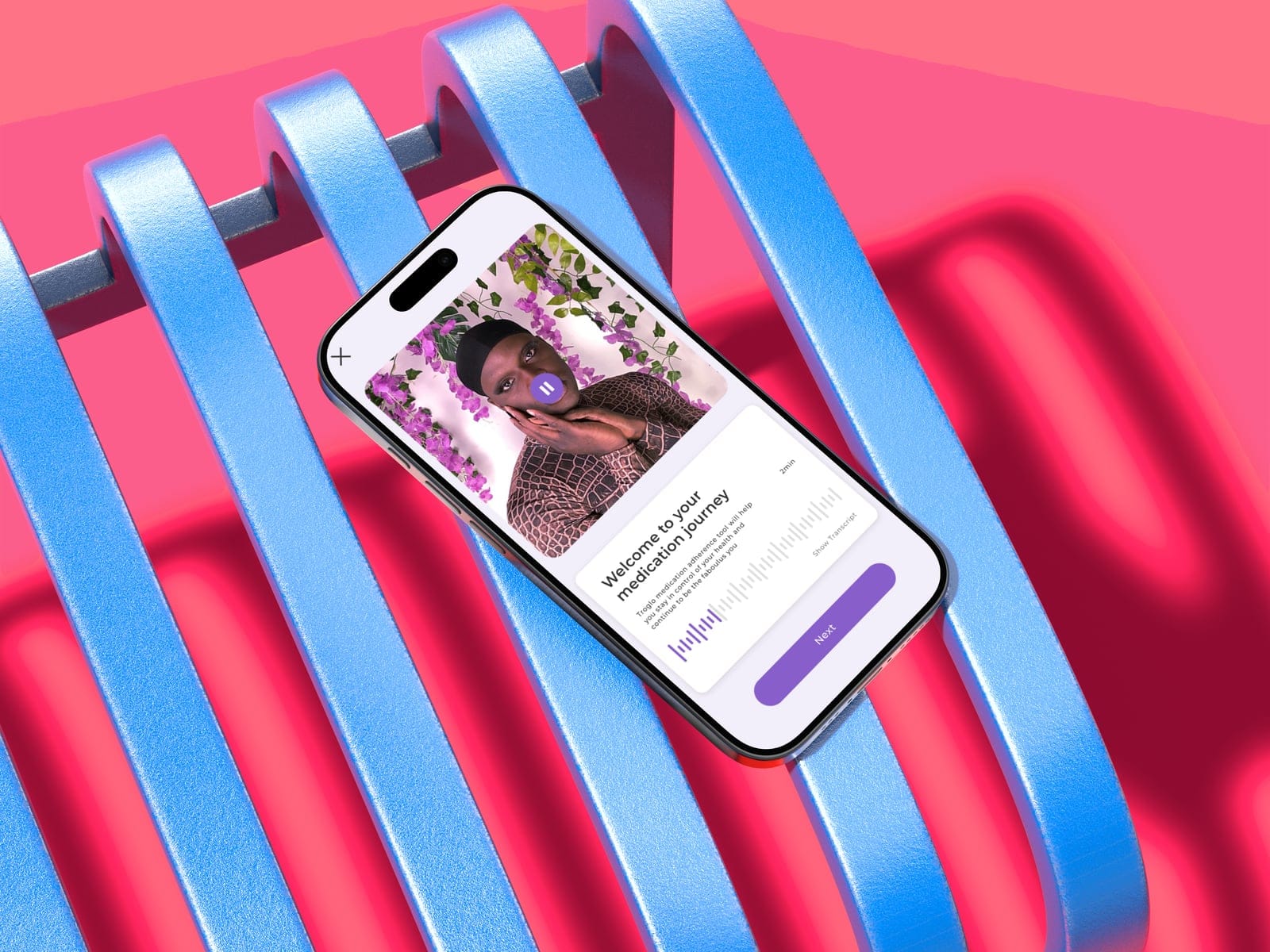
- Protection status system. Clinically meaningful PrEP adherence tracking instead of gamified streaks.
The result: 6 regulatory certifications. Identity respect and clinical rigor were the same thing.

The Process
Research came first and stayed throughout. 715+ survey respondents, 39+ community interviews and 12+ provider sessions, 7 research sprints. The discrimination data (50%+ of participants) drove the architecture.
The hardest design work was mapping GUMCAD compliance fields to user-facing language. That mapping drove the data model: gender identity separated from sex assigned at birth, the 70/30 collection split, inclusive field patterns structured as Atomic Design tokens.
The design system evolved across 3 releases and hundreds of Figma iterations. Validation testing with 10 participants killed the gamified streaks and confirmed three-state protection status. Late in the process, a CQC regulatory window opened and we pivoted to clinic-first, launching with 6 certifications.

Decision 1
Why Gender Identity and Sex Assigned at Birth Needed Separate Fields


Standard clinical systems use a binary male/female field. It's clinically imprecise and identity-erasing. In our research, trans participants described systems that rejected their names as "invalid."
| Option | Approach | Verdict |
|---|---|---|
| Binary male/female | Simple, compliant | Erases non-binary identities; lacks clinical precision for trans patients |
| Binary + "Other" | Technically inclusive | Communicates otherness; no clinical value |
| Separate identity + sex fields | Our choice | Respects identity AND maintains clinical accuracy; maps to GUMCAD |
Gender identity drives pronoun display and affirming UI across the app. Sex assigned at birth feeds clinical logic. Our clinical advisor confirmed that eGFR thresholds (kidney function markers for PrEP prescribing) differ for trans patients. One data model, two purposes.

Tradeoff: More complex data model requiring clinical advisor validation at every step. Onboarding became our most design-intensive feature, iterated across 3 design system releases. I structured inclusive field patterns as Atomic Design tokens so every new clinical form inherited inclusive defaults automatically.

Decision 2
How We Turned 30 Compliance Fields Into Personalization


GUMCAD requires ~30 data points from every patient. Clinicians told us directly: "Too much time collecting histories, not enough time dealing with patient issue."
| Option | Approach | Verdict |
|---|---|---|
| All clinician-collected | Standard clinical approach | Wastes clinician time; feels like surveillance |
| All at onboarding | Maximum efficiency | Massive onboarding with high drop-off risk |
| Post-hoc collection | Collect after care | Non-compliant with GUMCAD. Rejected immediately |
| 70/30 user/clinician split | Our choice | Users own their story; clinicians freed for care; compliant from day one |
Users self-complete 70% during onboarding, framed as "Tell us about yourself so we can provide personalised care." Self-reported identity data is more accurate than clinician-observed data. The architecture feeds this data forward. The clinician sees a pre-populated patient header before consultation starts, eliminating redundant questions.

Tradeoff: I explored 6 timing options for staged data collection before resolving the architecture through validation testing. Every GUMCAD field had to be mapped to user-facing language, which turned into the closest PM/designer collaboration on the project and shaped more downstream decisions than anything else we did.

Decision 3
Why We Rejected Gamified Streaks for HIV Prevention Medication


45% of survey respondents take daily or event-based PrEP. No competitor supported event-based tracking. We initially explored streak-based patterns, but A/B testing with 10 participants changed the direction.
"The wrong tone of voice for serious medications." (A/B testing participant)
A missed day doesn't just "break a streak." It means reduced protection against HIV. The engagement mechanic and the clinical reality had nothing to do with each other.
| Option | Approach | Verdict |
|---|---|---|
| Streak-based gamification | Proven engagement | "Wrong tone of voice"; causes anxiety; no clinical meaning |
| Simple reminder/calendar | Functional | No clinical meaning; no protection-level communication |
| Three-state protection status | Our choice | Communicates clinical reality; non-punitive; respects the gravity of HIV prevention |
How I tested. A 10-participant study put streak mechanics head-to-head against clinical protection status; the streaks lost on tone alone. Separately, I personally ran usability sessions with 9 PrEP users on the tracker flows.
I proposed a three-state system (Protected, Protection Uncertain, Not Protected) that communicates clinical reality instead of a game score. The tracker supports both daily and event-based dosing, which no competitor offered. In the shipped product, protection status uses three visual treatments mapped to clinical thresholds, consistent across the home screen and PrEP detail view.

Decision 4
Why We Shelved Our Differentiator to Seize a Regulatory Window

LVNDR's original differentiator was a full wellbeing suite: mental health support, community connection, lifestyle guidance. Then CQC registration accelerated unexpectedly. The regulatory window was closing.
| Option | Approach | Verdict |
|---|---|---|
| Wellbeing-first | Launch with the differentiator, add clinical later | Wellbeing data "not useful for making the case for" commissioner conversations |
| Clinic-first | Our choice | Seize the CQC window; clinical data supports fundraising; establish credibility, then expand |
Clinical credibility before the wellbeing vision. Clinical data was what commissioners and investors needed. Wellbeing data didn't make the case for institutional partnerships. The bet was to establish LVNDR as a certified clinical platform first, then expand from that credibility.
What we gave up: Months of wellbeing design work deferred. A real risk of being perceived as "just another telehealth app." But the regulatory window was finite, and the clinical launch provided the platform for everything that would follow.
Reflection

GUMCAD data collection could have felt like surveillance. Instead it became a personalization experience. Gender fields became clinical infrastructure that respects identity. The regulatory constraints told us what to build.
Every key decision came from a specific research finding: the 50%+ discrimination data, A/B testing on streaks, clinician time-waste interviews. Research stayed active throughout the project and gave the team conviction to make hard calls.
If I did this again, I'd start the GUMCAD field mapping earlier. That PM/designer collaboration shaped more of the product than anything else, and it shouldn't have waited until the design phase.
I also underestimated how much clinical partnership matters from day one. UX research finds the problems, but turning those into clinically safe solutions needs embedded clinical expertise throughout, not just at review gates.